







From Plain to Memorable: How Custom Printing Helps Independent Restaurants Stand Out

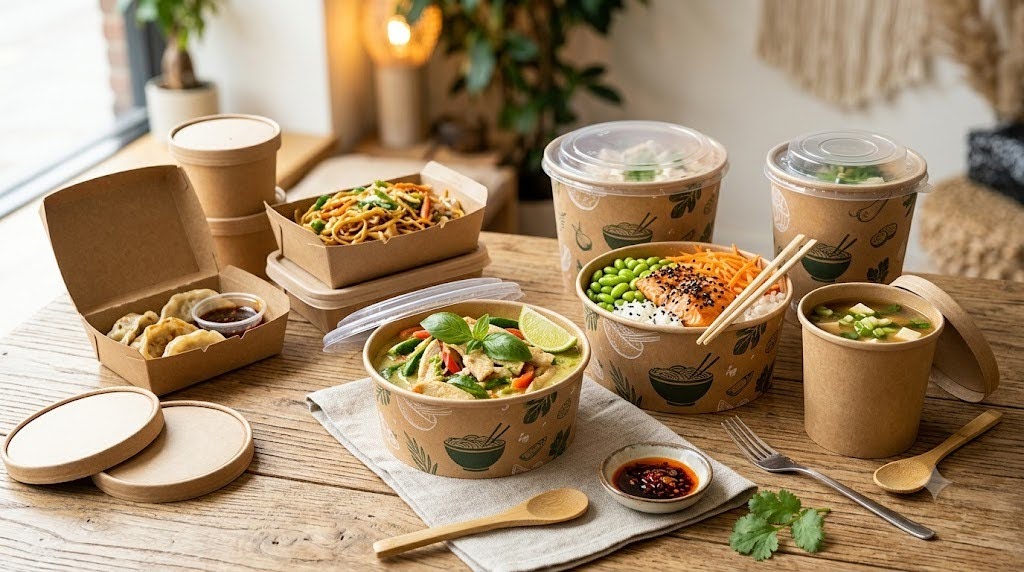
For independent restaurants, packaging is often the only trace of the brand left once food leaves the kitchen. A plain, unbranded bowl may do its job as a container, but it does little to make the restaurant recognisable after the order leaves the premises.
PandaPak, a UK-based foodservice packaging supplier, helps independent restaurants address this through custom printing and packaging development. PandaPak packaging is available through two routes: branded prints applied to ready-made products, and fully bespoke formats developed from scratch. Both draw on the same in-house experience in packaging design, colour matching and production, giving restaurants a way to build branded packaging around both their identity and their menu requirements.
What independent restaurants need from custom packaging
For an independent restaurant, own-brand packaging creates another touchpoint between the business and its customers. It can make the restaurant more distinctive in a market where generic packaging often looks much the same, maintain a consistent visual identity across takeaway orders, and give customers a recognisable detail to associate with the restaurant. However, achieving these benefits requires custom packaging to meet several needs that differ from those of larger restaurant chains.
Branding without a large upfront commitment
Most independent restaurants operate from one or a few locations, so they need branded packaging without committing to the production volumes typically associated with larger foodservice groups. Custom packaging should therefore be available at order quantities that make sense for a smaller operation, allowing the business to invest in its brand while keeping inventory requirements and upfront costs manageable.
An identity that doesn’t feel off-the-shelf
Independent restaurants often compete through personality as much as cuisine. Rather than relying on a standardised corporate identity, they may use distinctive colours, typography, illustrations and bespoke artwork to establish a recognisable look. That identity can also extend to the way the packaging itself is presented, allowing restaurants to create a more distinctive format rather than simply applying their branding to a standard container. Custom packaging should therefore reinforce the character of the restaurant through both its visual identity and the way that identity is expressed through the packaging.
Containers suited to what’s actually on the menu
Branding only adds value if the packaging also performs well for the food it contains. A ramen restaurant, bakery, salad bar and dessert café can have very different requirements for container formats, materials and lid configurations. Independent restaurants therefore need packaging selected around their actual menu and food applications, while still maintaining a consistent branded appearance across different formats.
A plan that holds up as the business changes
Packaging requirements can change as independent restaurants expand, introduce seasonal menus or open additional locations. A practical custom packaging programme should be flexible enough to accommodate these changes without requiring the restaurant to start the process again from scratch. This allows the packaging solution to evolve alongside the business as its requirements become more complex.
How PandaPak supports independent restaurants with own-brand packaging
PandaPak addresses these needs with a custom packaging approach that brings together flexible branding, food-specific performance, manageable order volumes, and support for long-term reordering.
Design flexibility for distinctive restaurant identities
PandaPak offers two customisation options, giving restaurants flexibility over how far they want to take their packaging design.
Branded packaging – Printing your logo on ready-made format
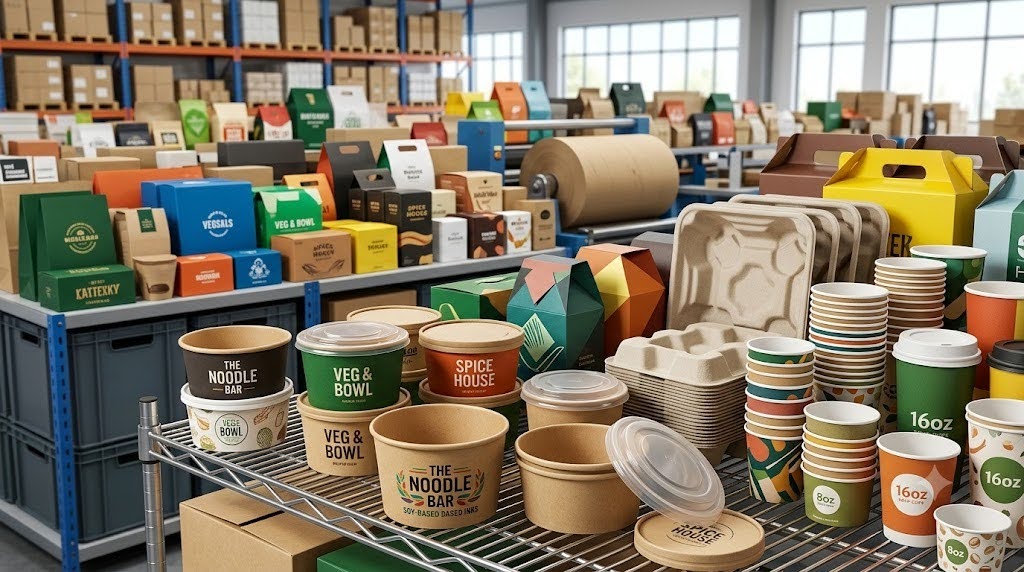
With the Branded option, the restaurant’s logo or artwork is printed directly onto existing products such as paper bowls, soup cups and lids. This provides a way to introduce a branded appearance without developing an entirely new packaging structure.
PandaPak supports colour reproduction through CMYK and the Pantone Matching System, with no limit on the number of colours used in a branded run. Printing uses food-safe soy-based inks, allowing restaurants to reproduce their chosen brand colours without treating food-contact requirements as an afterthought.
The process also goes beyond simply accepting an artwork file. Restaurants can supply artwork in AI, PDF, or EPS format, after which PandaPak’s team creates a 3D mockup for approval. This allows the customer to see how the artwork will appear on the actual packaging format before production begins, helping bridge the gap between a flat design file and the finished product.
Bespoke packaging – Custom packaging built to your specification, start to finish
For restaurants that need to go further than an existing product format allows, PandaPak’s Bespoke option provides deeper control over the packaging itself. This can include the structure, shape, dimensions, and format, as well as features such as divided compartments where appropriate. Material choices can also extend across paper, bagasse, PLA, and other foodservice-grade options depending on the application.
Bespoke packaging also allows more control over the visual finish. Designs can use up to six solid Pantone colours, with gloss or matt finishes and embossing available where suitable. This makes the route appropriate when the restaurant wants its brand to be expressed through the physical form and surface finish of the packaging, rather than through printed colour alone.
Packaging matched to specific food applications
PandaPak’s packaging range is built around the practical differences between food applications, rather than treating one container format as suitable for every type of dish. Its Standard Paper Bowls are available in multiple sizes, including formats up to 1300ml for rice, noodles and salads, as well as smaller sizes of around 500ml for sides and snacks. Double Layer Paper Bowls provide a thicker construction with greater insulation, making them suitable for hot, sauce-heavy Asian dishes, while Paper Soup Cups provide a dedicated format for soups and other liquid foods.
The range also offers different material options. Standard formats are available in kraft or white paperboard, giving restaurants a choice of base appearance before their branding is printed.
Lid design is another consideration across food applications. PandaPak offers lid options designed for different packaging formats and food types, including solutions for liquid-containing foods where secure closure is particularly important.
Together, these options allow restaurants serving a varied menu, from dry dishes and sides to liquid foods and hot meals requiring greater insulation, to cover different packaging needs within PandaPak’s range rather than sourcing separate formats from multiple suppliers.
Custom branding at manageable order volumes
PandaPak sets a clear minimum order quantity, so independent restaurants know the required starting volume before entering the customisation process. This gives smaller operations a defined basis for planning their initial investment, rather than leaving the MOQ open to negotiation or applying production volumes designed for larger restaurant groups.
With its experience in foodservice packaging, PandaPak brings this flexibility into a dedicated custom packaging service, helping independent restaurants develop branded packaging around both their visual identity and practical foodservice requirements. PandaPak’s custom printed paper bowls service goes beyond applying a logo to a standard container, with support across the design and approval process, CMYK and Pantone colour matching, and food-safe soya-based inks. This gives restaurants greater control over how their branding appears on the finished packaging while keeping the key stages of the process within one service.
Branded paper-bowl orders start from 10,000 units, giving restaurants a defined entry point for planning a branded packaging programme. For bespoke requirements, MOQs are confirmed against the specification, allowing the order volume to reflect the packaging brief rather than a fixed threshold. The printed paper-bowl range uses approximately 320gsm paperboard, while compatible lids feature 25–26 locking points, supporting the practical requirements of foodservice use.
From initial custom order to a scalable packaging programme
PandaPak builds several clear control points into the custom packaging process, helping independent restaurants manage the risks involved in their first branded order.
3D mockup approval before production: PandaPak does not proceed to production until the customer has signed off the 3D mockup, giving the restaurant a clear opportunity to confirm how the artwork will appear on the finished packaging.
Product-specific PDF templates: PDF templates are available for the branded range to help ensure artwork is aligned with the correct layout and dimensions from the outset, reducing unnecessary rounds of revisions between the restaurant and PandaPak.
One team for packaging and artwork development: The same team can advise on the appropriate packaging format and support artwork development, so restaurants do not need to coordinate separately between packaging and design or printing providers.
Custom-order terms stated upfront: PandaPak makes the conditions for custom orders clear before production, giving restaurants visibility of the relevant commercial terms before committing.
A defined 6–8 week lead time: The lead time is set at 6–8 weeks from artwork approval, giving restaurants a clear production window to plan their packaging requirements.
Together, these controls reduce uncertainty for an independent restaurant placing its first custom order. The value is not in adding unnecessary steps, but in giving each important decision a clear point for checking and approval.
Reordering as the business grows
As order volumes increase, PandaPak offers lower unit costs from 30,000 units and above, giving restaurants a clear opportunity to improve per-unit economics when placing larger reorders.
The two customisation options also give restaurants flexibility as their requirements develop. A business can increase volumes through the Branded option or move to Bespoke packaging when it needs greater control over the format and design. This allows the packaging programme to evolve with the restaurant without requiring a change of supplier as its needs become more sophisticated.
Final thought
The packaging a customer unpacks at home is never really neutral. It either communicates that the business has thought about the details, or becomes another anonymous container with no clear connection to the restaurant behind it.
For an independent restaurant working with tighter margins and a smaller operational footprint than a major chain, choosing between those outcomes is not simply a design decision. It is a business decision.
Custom packaging works best when branding, product performance, production control and future scalability are considered together. By offering both branded and bespoke routes, clear order thresholds, controlled artwork approval and packaging designed around foodservice applications, PandaPak gives independent restaurants a way to make their packaging more recognisable without treating customisation as a purely cosmetic exercise.