





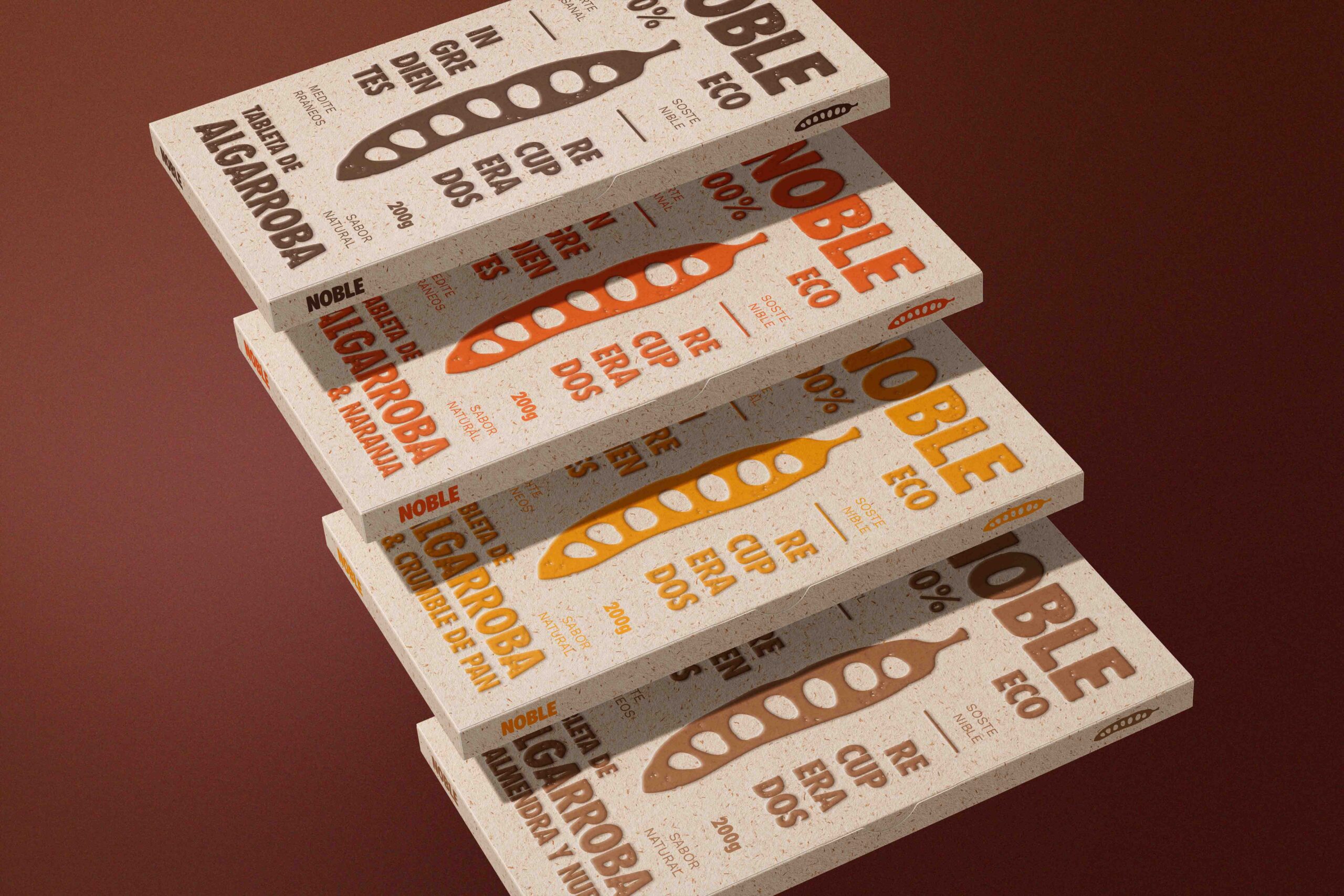
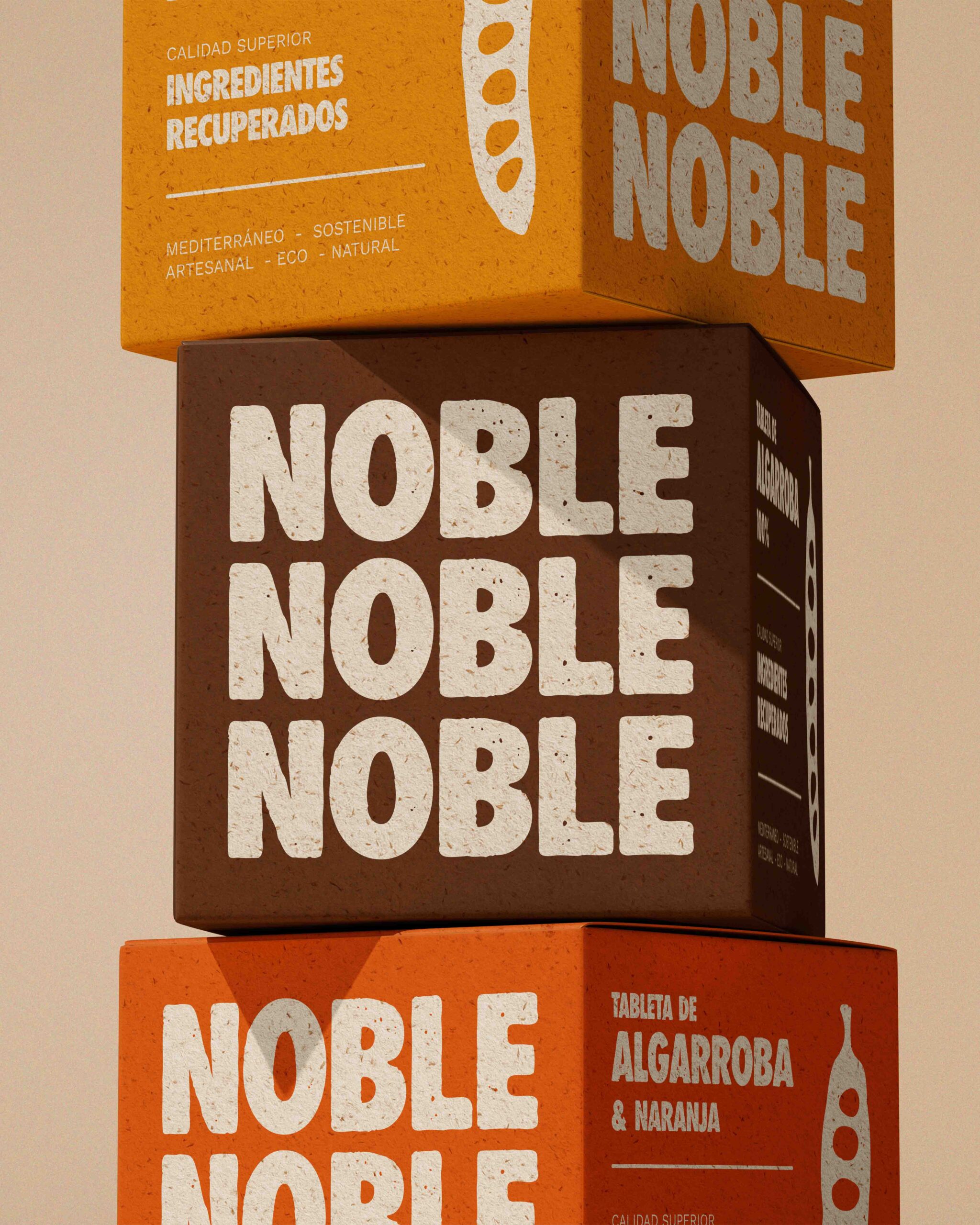

An upcycled carob bar in compostable, biomimetic packaging that turns rescued ingredients and waste into something valuable.
Noble takes a radically circular approach to confectionery. Its aim is to turn discarded ingredients into a sustainable, healthy treat that people want to eat.
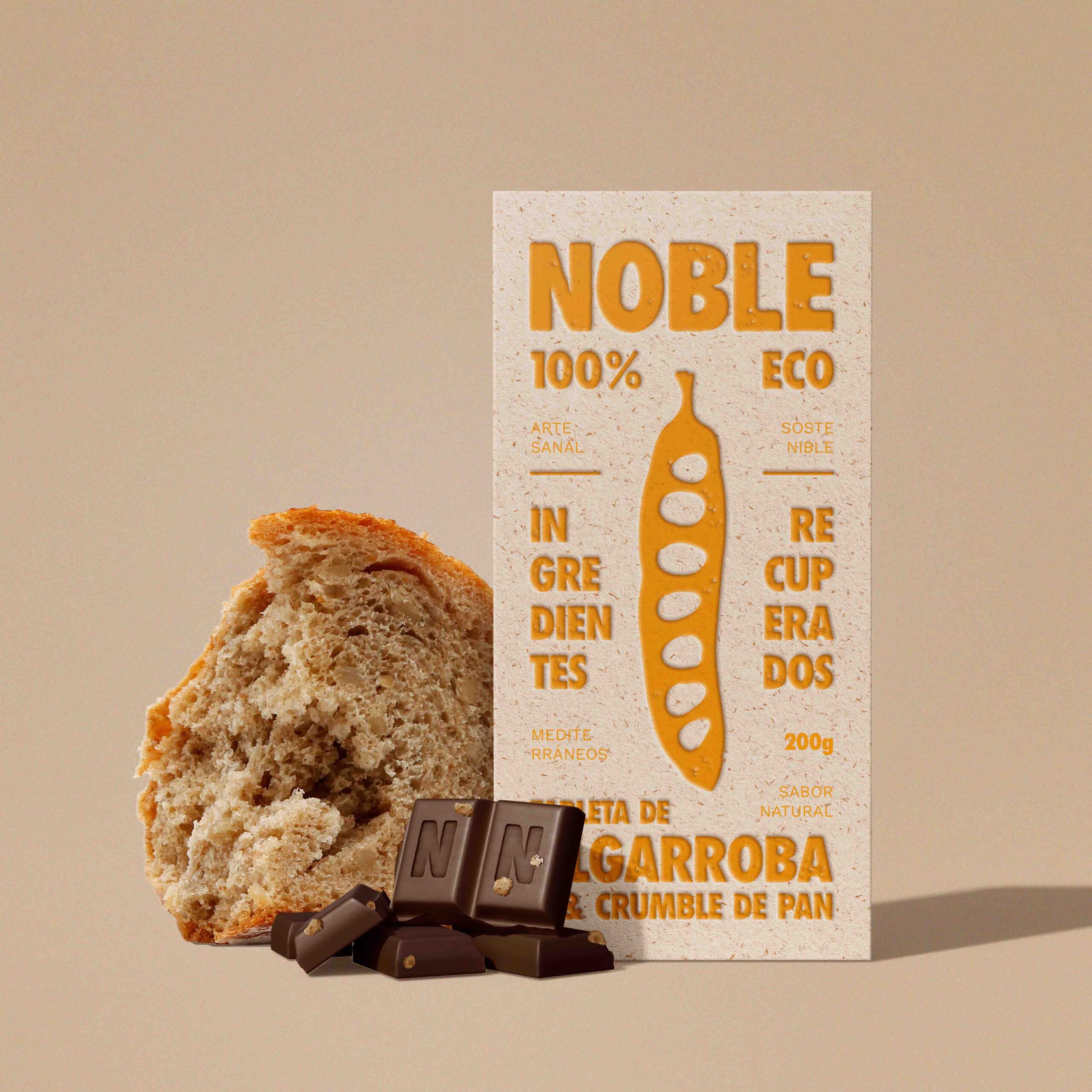
This cacao-free carob bar gives surplus food a new use. The carob tree is a hardy Mediterranean plant that needs little care and can be used in its entirety. The orange, bread and nut varieties use high-quality local ingredients rejected for their appearance.
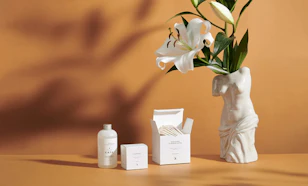
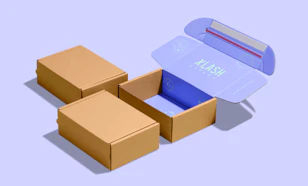
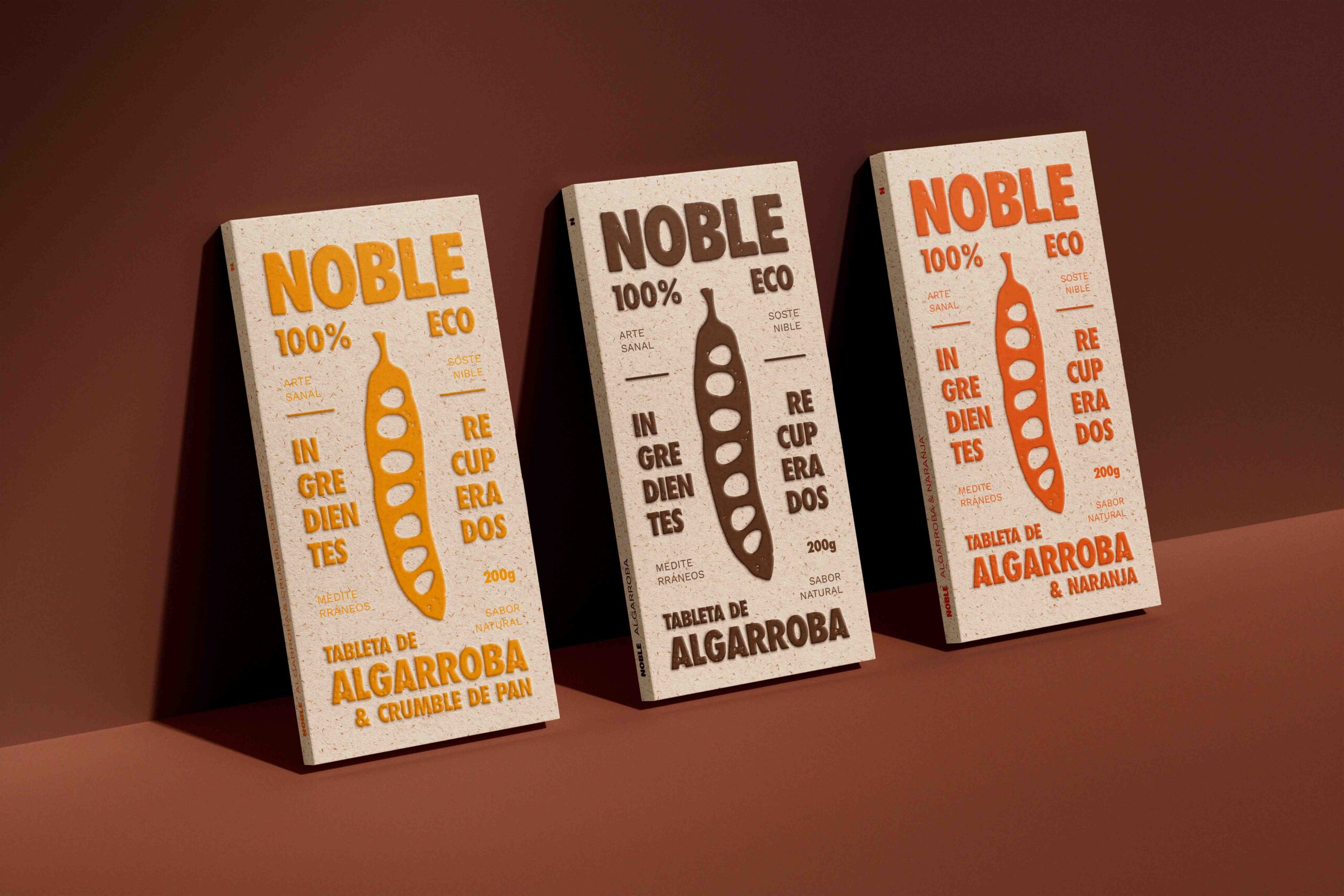
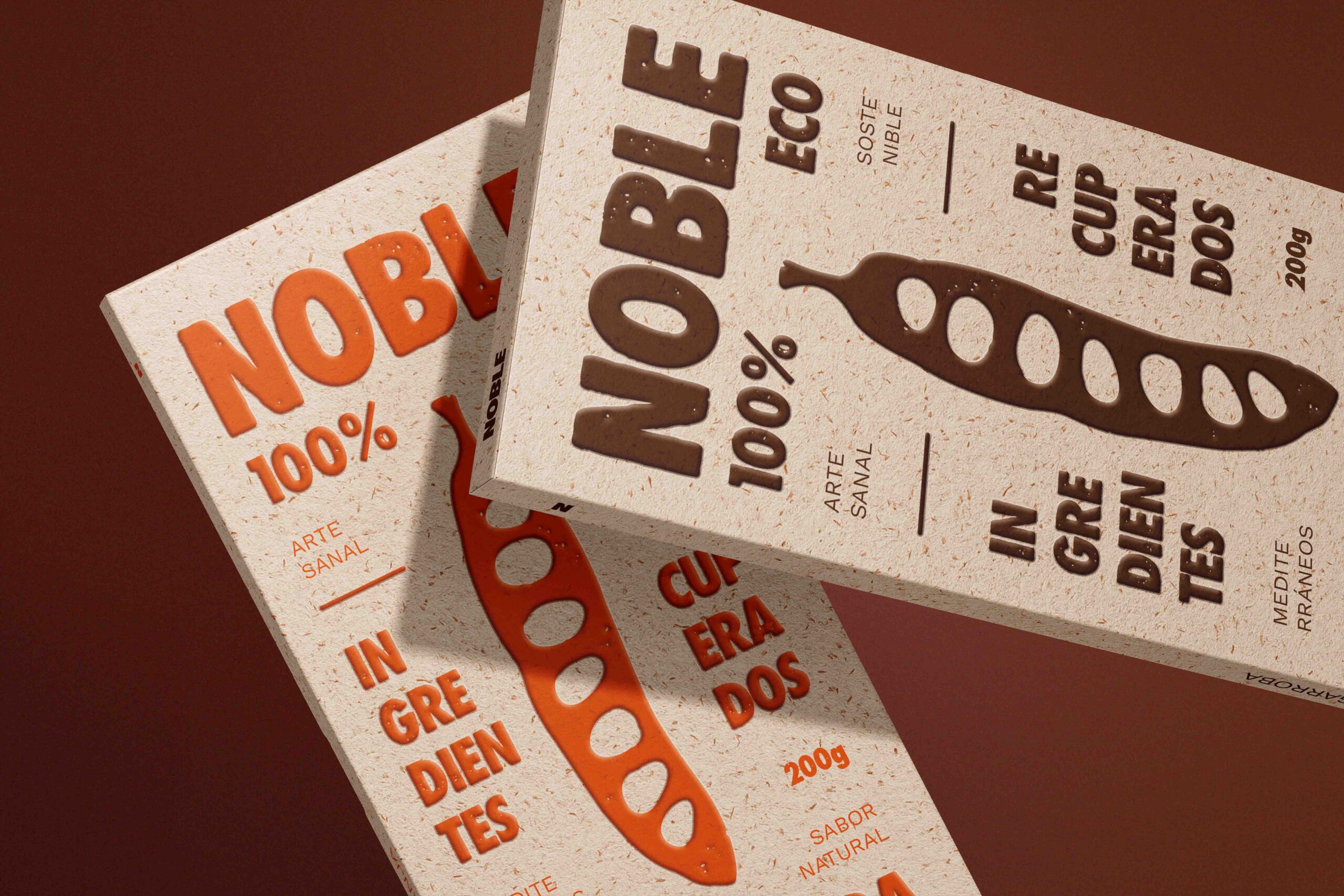
The innovation lies in the biomimetic packaging. Blending carob waste with recycled paper fibres gives the paper a naturally organic look, while a plant wax coating provides a functional barrier. The pack closes by folding or interlocking, so it needs no adhesive. Each variety uses a single plant-based ink, and blind embossing adds texture and a sense of craftsmanship.
Noble’s priorities are zero waste, local production, a smaller water footprint and lower emissions, with the aim of protecting Mediterranean biodiversity. The 100% compostable packaging closes the loop, showing how design can create value while caring for the environment.
Curator’s Insight
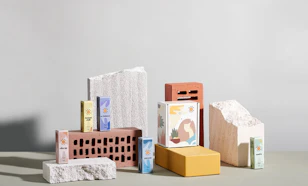
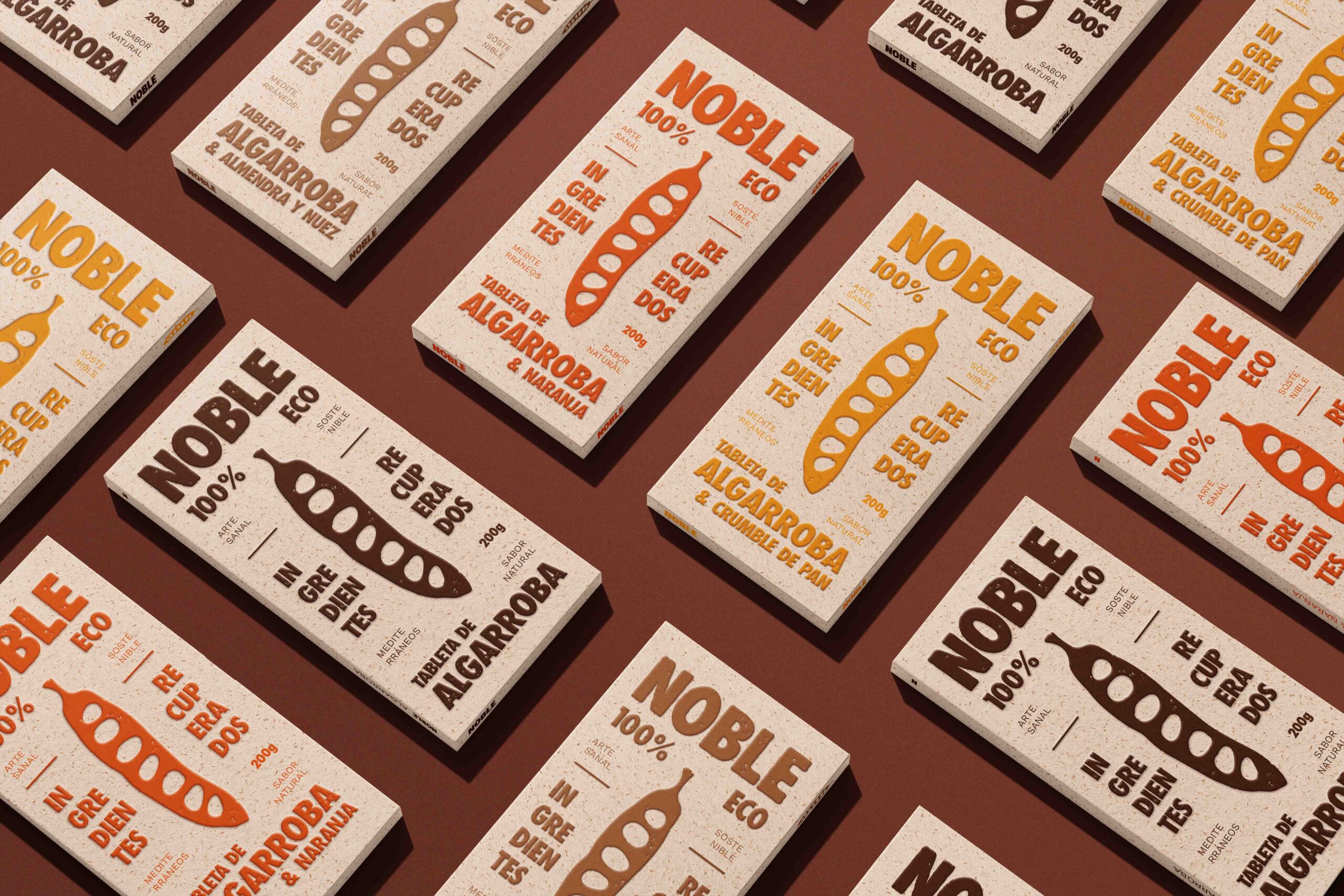
The carob pod does most of the work here. Its seed cavities become rounded openings that read as both illustration and logomark, and the same shape appears on the side panels of the boxes, so the symbol works whether the pack is seen flat or stacked. Type is treated as image: split syllables and mixed scales turn legal and descriptive copy into a vertical pattern, while the repeated wordmark on the cubes builds recognition through sheer volume. The raised lettering has a glossy, almost syrupy sheen against the matte, flecked board, which suggests melted chocolate without any food photography. A range-wide palette that runs from orange to deep brown makes the flavors feel like roast levels of one family.